I'd Smoke That BBQ T-Shirt Design: A Visual Feast for Grill Enthusiasts
Capturing the smoky aroma and fiery passion of barbecue culture requires more than just a clever phrase; it demands a design that speaks directly to the heart of the enthusiast. The I'd Smoke That BBQ T-Shirt Design is a prime example of visual storytelling that instantly connects with its audience. For graphic designers, creators, and business owners, understanding the anatomy of such a compelling asset is key to developing products and brands that resonate deeply within niche communities.
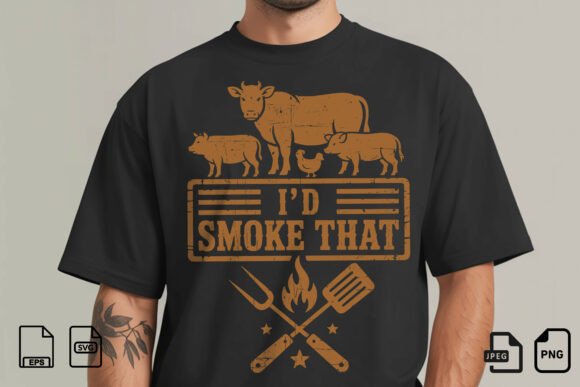
This design masterfully blends rustic vintage aesthetics with modern appeal. Featuring iconic farm animals like cows, pigs, and chickens, intertwined with grilling tools and flame elements, it creates an immediate association with the art of smoking meat. The distressed texture is not merely a stylistic choice; it taps into current design trends that favor authenticity and a handcrafted feel, making it highly suitable for contemporary apparel and print-on-demand products.
Practical Applications in Modern Design Projects
The versatility of a well-executed graphic like this extends far beyond a single t-shirt. Its bold typography and balanced layout ensure high visibility, making it a valuable creative asset for a wide range of projects. When selecting design elements, considering their scalability and context is crucial for maintaining brand consistency and visual impact.
Here are several practical applications where this design style excels:
- Branding and Merchandise: Perfect for creating cohesive brand identities for BBQ restaurants, catering services, or outdoor cooking influencers. It can be applied to uniforms, hats, and aprons to build a recognizable visual system.
- Marketing and Social Media: The eye-catching graphic serves as excellent content for social media graphics, promotional posters, and digital ads, especially for campaigns targeting Father's Day, summer cookouts, or food festivals.
- Packaging and Editorial Design: The vintage, artisanal vibe is ideal for product packaging for rubs, sauces, or grilling tools. It can also enhance the layout of food blogs, recipe books, or magazine features dedicated to culinary arts.
- Digital Products and UI Elements: Designers can use the core illustration style to inspire icons, badges, or thematic elements for websites, apps, or online communities focused on recipes and outdoor cooking.
Evaluating and Implementing Design Assets Effectively
Integrating a graphic like the I'd Smoke That BBQ T-Shirt Design into a professional workflow requires thoughtful evaluation. Key factors such as file compatibility, color palette alignment, and visual hierarchy must be considered to ensure seamless integration into your creative projects. High-quality assets often come in multiple formats like PNG, EPS, SVG, and JPEG, providing flexibility for both digital and print applications.
When using such a design, pay close attention to how its typography and imagery interact with your existing brand elements. The bold, assertive lettering should complement, not clash with, your primary typefaces. Similarly, the color scheme—often featuring warm, fiery tones—needs to harmonize with your broader brand palette to maintain a cohesive and professional presentation across all touchpoints, from web design to physical merchandise.
Tips for Maximizing Visual Impact
To leverage this design effectively, focus on context and clarity. Ensure the graphic is scaled appropriately for its medium; what works on a poster may need simplification for a small sticker or mobile UI. Use its strong visual hierarchy to guide the viewer's eye, perhaps pairing it with minimalist layouts to let the detailed artwork stand out. This approach is fundamental in both UX design and print design, where user engagement hinges on clear, compelling communication.
Ultimately, the power of a design like this lies in its ability to evoke emotion and identity. Thoughtful selection and application of such creative assets do more than just decorate a product; they build connection, tell a story, and elevate the overall quality of your visual communication. By prioritizing assets that align with your audience's passions and your design goals, you create more meaningful and impactful experiences that drive engagement and loyalty.